Gut Save vs. Regular Probiotics: What's the Difference?
How GutSave's multi-ingredient formula compares with a standard probiotic, and how to decide which approach fits you.
Last updated: October 5, 2026
If you already know probiotics, you may wonder what Gut Save adds and whether it's worth paying more for. This guide compares GutSave's multi-ingredient approach with a typical single-purpose probiotic so you can decide which fits your needs. For the complete product breakdown, see our main Gut Save review.
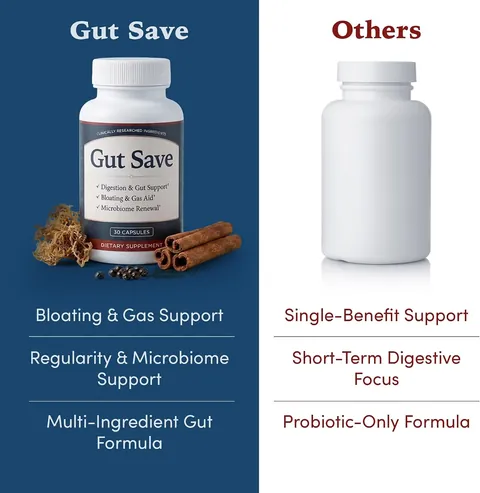
Gut Save vs. a Typical Probiotic: Side by Side
| Feature | Gut Save | Typical probiotic |
|---|---|---|
| What's inside | Probiotics plus collagen, colostrum, cinnamon, sea moss, papaya seed and black cumin | Probiotic strains only (sometimes with a prebiotic fiber) |
| Probiotic count (CFU) on label | Not published on the sales page | Usually stated |
| Ingredient amounts | Mostly proprietary; only collagen (300 mg) published | Usually listed per strain or as a total |
| Allergens to check | Fish and dairy | Varies; often dairy-free options exist |
| Where to buy | Official website only | Pharmacies, grocery stores, online |
| Price | $49–$79 per month depending on package | Varies widely by brand and strain count |
| Refund | 60 days from delivery, return all bottles | Depends on store |
What Gut Save Adds Beyond Probiotics
A standard probiotic does one job: it supplies bacterial cultures. Gut Save's design adds three other kinds of ingredients alongside them:
- Fiber to feed bacteria — Irish sea moss, often described as a prebiotic.
- Proteins associated with the gut lining — marine collagen peptides and colostrum.
- Traditional digestive botanicals — Ceylon cinnamon, papaya seed and black cumin.
The appeal is convenience: one capsule instead of several products. The trade-offs are less transparency about doses, more potential allergens, and a higher price than many basic probiotics.
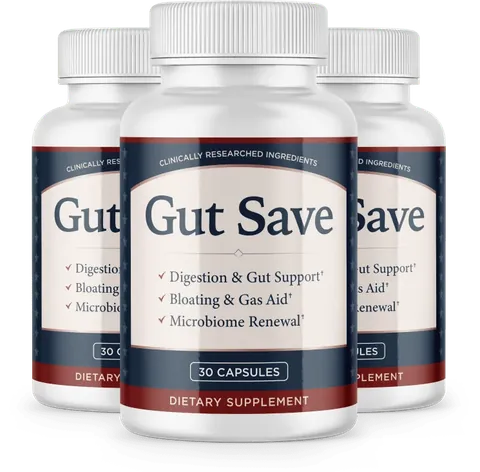
Like the all-in-one approach?
See current Gut Save packages and prices on the manufacturer's official order page.
See Gut Save Packages on the Official Site → Opens the official Gut Save order page, processed by BuyGoods. One-time payment, 60-day refund policy.Who Might Prefer Gut Save
- You want a single daily capsule rather than several separate supplements.
- You've tried a basic probiotic and want to try a broader formula.
- You have no fish or dairy allergy and your doctor is comfortable with the ingredients.
Who Might Prefer a Regular Probiotic
- You want to know exactly how many live cultures (CFU) and which strains you're taking.
- You're allergic to fish or dairy, or need to avoid iodine.
- Your doctor has recommended a specific, clinically studied strain.
- You want to buy locally with an easy store return.
Can You Take Gut Save With a Probiotic?
Gut Save already contains probiotic cultures, so adding a second probiotic may be unnecessary. Ask your doctor or pharmacist before combining them, especially if you have a weakened immune system.
Frequently Asked Questions
Is Gut Save better than a regular probiotic?
It's different, not proven better. Gut Save adds collagen, colostrum, sea moss and botanicals to its probiotics, but most doses and the CFU count aren't published, and there's no head-to-head study comparing it with a standard probiotic.
Does Gut Save contain probiotics?
Yes. The sales page names five strains: L. paracasei, L. buchneri, L. brevis, L. hilgardii and Bifidobacterium lactis BL-04.
Should I take Gut Save and a probiotic together?
Gut Save already contains probiotics, so a second one may be unnecessary. Check with your doctor or pharmacist before combining them.
Why is Gut Save more expensive than some probiotics?
It includes several non-probiotic ingredients and is sold only through its own website. Prices range from $49 to $79 per bottle depending on package size.
Is Gut Save a prebiotic?
It contains Irish sea moss, a seaweed with natural fibers often described as prebiotic, alongside its probiotic cultures.