Gut Save Ingredients: Full List, Doses & What Each One Does
A plain-English breakdown of every ingredient in GutSave, what the research behind each one actually studied, and the allergy notes that matter after 50.
Last updated: October 5, 2026
Gut Save (also written GutSave) combines protein, botanical, sea-vegetable and probiotic ingredients in one daily capsule. This guide goes through every Gut Save ingredient in more depth than our main review: what each one is, why it's likely included, what the research the manufacturer cites actually studied, and who should be careful with it.
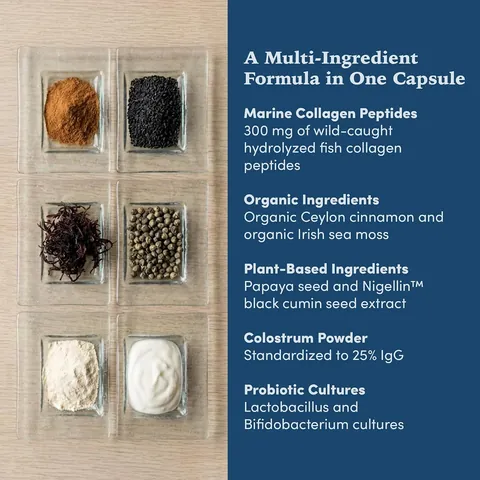
Gut Save Ingredient List at a Glance
| Ingredient | Type | Amount published? | Allergy / caution note |
|---|---|---|---|
| Marine collagen peptides | Protein | Yes — 300 mg | Fish-derived |
| Colostrum powder | Whole food | Standardized to 25% IgG; amount not shown | Dairy-derived |
| Organic Ceylon cinnamon | Botanical | No | — |
| Organic Irish sea moss | Sea vegetable | No | Natural source of iodine |
| Papaya seed | Botanical | No | — |
| Nigellin™ black cumin seed extract | Botanical extract | No | Ask your doctor if you take prescription medications |
| Probiotic cultures (5 strains) | Probiotic | No CFU count published | Not for everyone with a weakened immune system |
Is lion's mane in Gut Save?
It depends on which source you read. The official sales page lists organic lion's mane powder, but the product's own ingredient graphic does not — and the graphic lists Ceylon cinnamon and Irish sea moss, which the sales page doesn't mention. The Supplement Facts panel on the bottle you receive is the authoritative list. Check it before you take the product, especially if you have allergies.
Each Gut Save Ingredient in Detail
1. Marine Collagen Peptides (300 mg)
Collagen is the main structural protein in the body's connective tissue. “Peptides” means the collagen has been broken down (hydrolyzed) into smaller pieces that are easier to digest. Gut Save uses wild-caught fish collagen, and 300 mg is the only individual dose the brand publishes. For comparison, collagen powders sold on their own often provide several grams per serving, so 300 mg is a modest amount. Avoid if you have a fish allergy.
2. Colostrum Powder (25% IgG)
Colostrum is the first milk a cow produces after giving birth. It's naturally rich in immunoglobulins, a family of proteins; “25% IgG” tells you a quarter of the colostrum by weight is immunoglobulin G. The manufacturer points to a 2011 study in athletes in which bovine colostrum limited the rise in gut permeability after heavy exercise. That's one of the few human studies behind any Gut Save ingredient — but it was done in young, healthy athletes. Dairy-derived: not suitable for people with a milk allergy.
3. Organic Ceylon Cinnamon
Ceylon, or “true,” cinnamon comes from Sri Lanka. It's a better choice for supplements than the cassia cinnamon found in most US kitchens because it naturally contains far less coumarin, a compound that can be a concern in large amounts. Cinnamon has a long history as a warming digestive spice.
4. Organic Irish Sea Moss
Irish sea moss (Chondrus crispus) is a red seaweed that contains natural fibers. Some fibers act as food for beneficial gut bacteria, which is why sea moss is often called a prebiotic. The manufacturer cites a 2015 study in which diets supplemented with this seaweed showed prebiotic effects in animals. Sea moss is a natural source of iodine, so people with thyroid conditions or on thyroid medication should check with their doctor first.
5. Papaya Seed
Ground papaya seeds have a peppery flavor and a long history in traditional digestive remedies. The study the manufacturer cites was a small human pilot study of dried papaya seeds against intestinal parasites — not a study of bloating or regularity.
6. Nigellin™ Black Cumin Seed Extract
Black cumin (Nigella sativa) is a seed used in cooking and traditional herbal practice across the Middle East and South Asia. Nigellin™ is a branded extract. Its best-known compound, thymoquinone, showed anti-inflammatory effects in experimental colitis models in the research the brand cites. Because concentrated botanical extracts can interact with some medications, talk to your doctor if you take prescription drugs.
7. Probiotic Cultures
The product graphic lists Lactobacillus and Bifidobacterium cultures. The sales page names five strains:
- Bifidobacterium lactis BL-04 — a well-characterized strain used in many commercial probiotics. In a 2025 lab study, a three-strain mix that included BL-04 helped protect gut-lining cells.
- Lactobacillus paracasei — common in probiotics and fermented dairy; reduced intestinal inflammation in a mouse model.
- Lactobacillus brevis — found in fermented vegetables; studied alongside L. plantarum in mice.
- Lactobacillus buchneri — studied for obesity-related changes in mice on a high-fat diet.
- Lactobacillus hilgardii — less common; research is limited to laboratory antioxidant tests.
Most probiotic products state a CFU count (colony-forming units) on the label so you can see how many live organisms you get. Gut Save doesn't publish one on its sales page.
Want to see the full label?
The official site posts the Supplement Facts label on its references page and lists current package prices.
See Gut Save on the Official Website → Opens the official Gut Save order page, processed by BuyGoods. One-time payment, 60-day refund policy.What a “Proprietary Blend” Means for You
A proprietary blend lists ingredients but not how much of each one is in the capsule. It's legal and common in supplements, but it means you can't compare Gut Save's doses with the amounts used in research, or with other products. If precise doses matter to you, ask the manufacturer at contact@gutsave-product.com or compare the bottle's Supplement Facts panel before buying more.
Is Gut Save Vegan, Gluten-Free or Dairy-Free?
Not vegan and not dairy-free — it contains fish collagen and bovine colostrum. The manufacturer describes the formula as non-GMO and stimulant-free; we didn't find a gluten-free statement on the sales page, so check the label if that matters to you.
Frequently Asked Questions
What are the main ingredients in Gut Save?
The product's ingredient graphic lists 300 mg of marine collagen peptides, colostrum (25% IgG), organic Ceylon cinnamon, organic Irish sea moss, papaya seed, Nigellin™ black cumin seed extract, and Lactobacillus and Bifidobacterium probiotic cultures.
Does Gut Save contain lion's mane?
The official sales page lists organic lion's mane powder, but the product's ingredient graphic does not. Check the Supplement Facts panel on your bottle for the definitive ingredient list.
How much collagen is in Gut Save?
300 mg of hydrolyzed marine (fish) collagen peptides per capsule, according to the product graphic. It's the only ingredient with a published individual amount.
How many probiotics (CFU) does Gut Save have?
A CFU count isn't published on the sales page. The sales page names five strains: L. paracasei, L. buchneri, L. brevis, L. hilgardii and B. lactis BL-04.
Is Gut Save safe for people with a fish or milk allergy?
No. It contains fish collagen and bovine colostrum. People with either allergy should not take it without their doctor's approval.